Gunthara: A Stylish Script Handwritten Font for Editorial Design
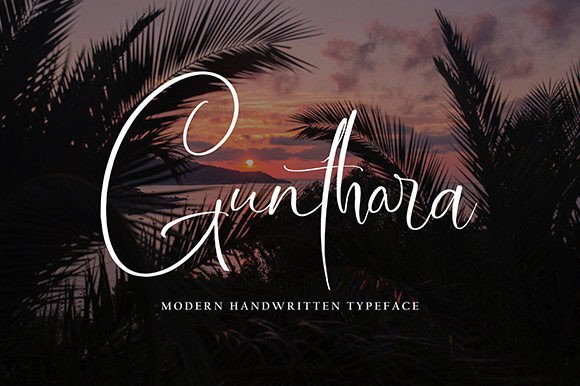
As a publisher and editorial designer who crafts blogs, digital magazines, printable workbooks, and branded newsletters, I rely on fonts that do more than look beautiful—they shape tone, guide attention, and reinforce identity. Gunthara is a stylish and fresh script font with an amazing look: fluid, confident, and effortlessly elegant. It belongs to the Script Handwritten category of Fonts, designed not for body text but for moments where voice, warmth, and intention matter most—like a handwritten note from a trusted friend or the first line of a story you can’t scroll past.
Gunthara for Blog Headers and Digital Magazine Covers
When readers land on your blog or open your digital magazine, the header is their first impression—and often their last decision point before staying or leaving. Gunthara delivers immediate visual distinction as a Script Handwritten display font: its rhythmic stroke contrast and subtle bounce invite pause and recognition. Unlike overused brush scripts, Gunthara balances personality with clarity—even at 48–60px on screen. Use it for main headlines in Substack newsletters, Medium cover images, or blog post banners. Pair it with a clean sans serif like Inter or a warm serif like Merriweather for body copy, and you create a hierarchy that feels intentional, human, and editorially grounded.
Gunthara for Quote Graphics and Pull Quotes in Ebooks and Guides
Readers remember quotes—not paragraphs. In ebooks, printable guides, and coaching workbooks, Gunthara transforms short, resonant lines into visual anchors. Its natural flow mimics thoughtful penmanship, making quotes feel personal and earned. Because Gunthara is a Script Handwritten font built for impact—not extended reading—it works best at 32–42px with generous line spacing and soft background contrast (e.g., light cream over muted sage). For PDF exports, test rendering across devices: Gunthara embeds cleanly in Adobe Acrobat and maintains legibility on tablets and e-ink readers when exported as outlined text or with proper font licensing.
Gunthara for Wedding Invitations and Elegant Branding
If your content brand centers around celebration, mindfulness, or curated lifestyle—think wedding planning guides, seasonal recipe collections, or slow-living newsletters—Gunthara becomes part of your visual signature. Its graceful entry strokes and balanced exit tails lend sophistication without stiffness. As a Script Handwritten font, it supports both digital invites (SVG-ready for Canva or Mailchimp) and high-resolution print stationery. When used consistently across invitation suites, social media banners, and email headers, Gunthara builds cohesive, emotionally resonant branding—especially when paired with a delicate serif for names and dates, and a neutral sans for practical details.
Gunthara for Newsletter Subject Lines and Social Media Banding
In crowded inboxes and fast-scrolling feeds, subject lines and Instagram story banners need micro-moments of charm. Gunthara shines here—not as filler, but as punctuation with personality. A single word like “Welcome,” “New,” or “Inside” set in Gunthara adds warmth and differentiation amid algorithm-driven sameness. As a Script Handwritten Font, it performs well in PNG and SVG formats for email clients and Stories, provided you avoid thin strokes that risk pixelation below 24px. For accessibility, always pair with alt text and maintain sufficient contrast (at least 4.5:1 against background).
Gunthara for Printable Planners, Worksheets, and Lead Magnets
Creative professionals and course creators know: lead magnets live or die by perceived value—and typography is silent persuasion. Gunthara elevates printable planners, reflection worksheets, and journal prompts by signaling care in craft. Its organic rhythm makes structured layouts feel inviting, not rigid. Because Gunthara is a Script Handwritten font optimized for display use, it’s ideal for section dividers (“Your Intentions,” “Weekly Focus”), decorative headers, and hand-drawn-style accents—never for dense instructions or fine-print disclaimers. Always verify commercial licensing: Gunthara permits use in client-facing printables, paid templates, and downloadable resources when properly licensed.
Gunthara for Logo Design and Publication Identity Systems
Your logo isn’t just a mark—it’s the first sentence of your publication’s story. Gunthara works powerfully in monogram logos, wordmarks for boutique newsletters, or masthead treatments for indie magazines. Its balance of freshness and timelessness avoids trend fatigue; unlike overly ornate scripts, Gunthara scales gracefully from favicon size to billboard mockups. As a Script Handwritten Font, it pairs naturally with geometric sans serifs (for contrast) or low-contrast serifs (for harmony), building flexible identity systems that feel unified across web, print, and social. Check whether the Gunthara package includes stylistic alternates or ligatures—they add nuance for logo refinement without extra design labor.
Gunthara for Letters, Stationery, and Personalized Content Branding
In an age of automation, handwritten authenticity stands out. Whether you’re designing a welcome letter for new subscribers, a thank-you card for ebook buyers, or branded stationery for your creative business, Gunthara delivers the intimacy of ink without sacrificing polish. As a Script Handwritten font, it bridges digital efficiency and tactile warmth—ideal for Canva templates, Notion headers, or printed letterpress pieces. For long-form letters, use Gunthara only for salutations and sign-offs; keep body copy in a highly readable serif or sans. And remember: consistent application—same weight, same tracking, same pairing logic—turns occasional use into recognizable voice.
If you design for readers—not just algorithms—you know typography is never neutral. Gunthara is more than a Script Handwritten Font. It’s a tool for tonal precision, a shortcut to emotional resonance, and a quiet signal that your content was made with care. Whether you’re launching a newsletter, packaging a digital guide, or refining your brand’s visual language, Gunthara earns its place in your editorial toolkit—not as decoration, but as intention made visible.